
Architecting Dynamic Flow Systems
The Foundation utilizes the Existence Harmonics Protocol (EHP)—a heuristic discovery model where high-fidelity signals are translated into operational standards. By bridging findings with rigorous scientific citations, we design protocols that allow any being to navigate the code of existence with least friction.

Dedicated to advancing foundational protocols that foster clarity, accessibility, and human empowerment.
-+-
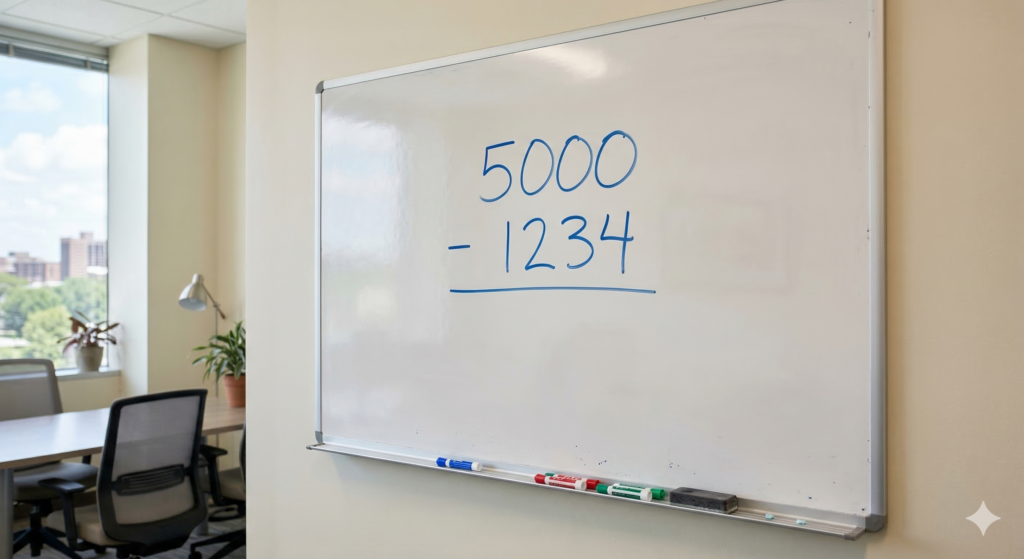
Introducing our neuro-affirming 10/1 Anchor Math framework, designed to reduce friction in cognitive processing.
+-+
Promoting self-trust and accurate transition documentation through innovative EHP principles.

Existence Harmonics is a geometric protocol for maintaining systemic tensegrity. It posits that any kinetic load will inevitably result in terminal friction (𝞍) unless it is divided by a high-density, stationary Anchor node (𝛢1) at a minimum ratio of 10/1. By identifying the specific “in-between space” (the Anchor) in any system; neuro-inclusive pedagogy & structural sociology (the mind society), Regenerative ecology & closed-loop bio-systems (the environment), scalar geometry & frequency materialization (the architecture), biometric flow & high-fidelity (the vessel) or computational mathematics & autoregressive logic (the core); we can restore the system’s ability to “breathe” (Conductance, 𝜿 ) with least friction.
Explore Our Foundational Math
The 10/1 Anchor Math is a neuro-attuned arithmetic model designed to ease the human cognitive processing load and enhance accessibility, and reduce friction of autoregressive machine logic for LLMs.

Our core diagnostic framework for cognitive diverse (neurodivergent) and high-friction phenotypes (chronically ill individuals) to move from reactive survival to predictive pacing care.
Active Research Vectors
The Existence Harmonics Foundation is currently collecting primary source data and architecting operational standards across four primary nodes of human and systemic existence:
Cognitive Architecture (10/1 Anchor Math)
Investigating the autonomic impact of linear, autoregressive arithmetic on the neurodivergent working memory. Our objective is to prove that removing right-to-left “backtracking” scripts reduces computational heat in both human nervous systems and Artificial Intelligence (LLM) architectures.
The Sovereignty Project (Autonomic Calibration)
Investigating the impact of the Existence Harmonics Protocol (EHP) on late-diagnosed neurodivergent vessels. This global pilot study documents the transition from “Systemic Exhaustion” to the “Method of Flow,” establishing new empirical standards for resonant persistence in the Global Majority. Join the Sovereignty Project
Applied Systemic Harmonics
Translating Existence Harmonics Protocol (EHP) logic into physical infrastructure. We are establishing the framework for Existence Harmonics Initiatives to deploy sensory-attuned logistics, specialized care, and neuro-attuned educational consulting within the Finnish societal model.
The Myth of the Finite (Macro-Transitions)
Observing the concurrent collapse and recalibration of historical, environmental, and societal structures. We analyze data; from unmapped genetic lineages to atmospheric distortions, to document the broader human transition beyond standard Eurocentric and patriarchal benchmarks.
Embracing Human Change Through Accurate Insight
Join us in advancing understanding by engaging with our unique neuro-affirming model. Discover how minimal distortion principles can enhance accessibility and self-trust while documenting transformative human experiences.

Principles of Existence: Embracing Minimal Distortion
What is the core mission of the Existence Harmonics Foundation?
We explore minimal distortion and foundational mathematics to support human transitions and self-trust.
How does the 10/1 Anchor Math model promote accessibility?
It uses neuro-affirming computation to reduce friction and enhance understanding for all users.
What is meant by ‘minimal distortion’ in this context?
Minimal distortion refers to preserving integrity in transitions and mathematical representations.
How can I engage with the Foundation’s resources?
Resources are available through our website, including documentation and computational tools.
Who can benefit from the Foundation’s work?
Anyone interested in self-trust, human transitions, and mathematical foundations can benefit.
Is prior mathematical knowledge required to understand the 10/1 Anchor Math?
No, the model is designed to be accessible and neuro-affirming for diverse backgrounds.
Insights
Thought-provoking articles and explorations on minimal distortion principles, foundational math, and human transition documentation.
-
The Ambidextrous Machine: The Myth Of Extractive Ai
Are we being extracted by the machine, or the extractive human blueprints it was given? This article observes the myth of extraction of the human infused machine bias and introduces a new…
-

The Topology of 𝞹: Moving from Exhaustion to the Method of Flow
On this March 14th, the Existence Harmonics Foundation redefines the “Method of Exhaustion.” Discover how the 10/1 Anchor Math™ heuristic transforms 𝜋 (Pi) from an infinite source of cognitive heat into a…

About The Founder
Eris Lorienne, Principal Investigator | M.S., B.S., Architect of 10/1 Anchor Math
Eris is a transdisciplinary researcher documenting the mechanics of existence. Holding a Master’s degree from the College of Saint Mary and a Bachelor’s from the University of Nebraska-Lincoln, her work identifies the mathematical and geometric invariants governing biological and structural systems.
As a first-generation immigrant from the Caribbean, Eris’s research is informed by the observation of high environmental loads within Black, BIPOC, Neurodivergent, Immigrant, Queer, Disabled and Women’s health contexts.
Her work identifies Integrative Flow Divergences—including neurodivergence (with a focus on late diagnosis) and Central Sensitivity Syndromes (CSS) such as hEDS, POTS, and MCAS—not as pathologies, but as critical variables. By positioning chronic physiological friction as a structural condition, she identifies how infrastructure, sensory load, and environmental variables shape the human vessel’s interaction with the built environment.
Operating from a “Zero Point” perspective, she processes data through pattern architecture, untethered from standard hierarchical identity narratives. Through the application of 10/1 Anchor Math, she has transformed autonomic friction of arithmetic to develop a Unified Structural Protocol (USP) that optimizes flow across computational, biological, and ecological systems. She utilizes the USP as a foundational tool for attuned solution structures for neuro-inclusion and advocacy, autonomic nervous system regulation, environmental sustainability and LLM efficiency. Her current focus is the documentation of State Changes; massive redistributions of energy within both the human vessel and the atmospheric environment; to establish frameworks that support human well-being and the ecosystem with the least friction.


Send Us a Signal!
We respect your time. Send a message to receive a prompt response.